Platform architecture
This page explains the lanes, the logic, and the response design that hold the broader site together.
No private case intake: do not send child names, sealed records, private allegations, or confidential files through public campaign links. Privacy boundarySafety first
Site boundary: JTforME is the campaign, public-record, citizen-initiative, and Maine family-help routing hub. For volunteer-only public education, printable tools, and research/source materials, use FOCaF.
Family matters first. Measurable accountability. Stronger family stability. Practical tools that reduce avoidable harm instead of politely documenting it after the fact.
I want this site to read like what it is becoming: a connected public-interest platform for people in Maine who are tired of watching children and families absorb the cost of preventable dysfunction.
Use it when someone needs to understand how the whole children-and-families platform fits together, not just one page or one complaint.
This page explains the lanes, the logic, and the response design that hold the broader site together.
Use it when someone asks what the campaign is trying to build, how the lanes fit together, or why the site is larger than a normal campaign page.
For most new readers, the flagship page is still the better first link before they come here.
This page should hand readers into the dashboard, standards, tracker, or practical pages once the model is clear.
This architecture only makes sense if it helps people understand where the pressure is, which door is real, how proof should be read, and what reform mechanisms are actually on the table.
Explain how practical-help, proof, standards, and reform lanes fit together so readers are not forced to guess.
The platform should keep families away from unnecessary reading when what they need is a verified outside door or the next practical page.
Architecture is only credible when it hands people into charts, labels, methods, briefs, and receipts cleanly.
Public literacy includes the realistic mechanisms for accountability and reform, not just the complaint itself.
The platform page should explain the lane logic, show how the parts fit together, and then hand readers back into the dashboard, standards, tracker, and initiative lane instead of floating as theory.
Use the public-literacy and platform framing sections to understand what the architecture is supposed to protect against.
The platform page is strongest when it explains how the site is structured, not when it competes with the narrower pages.
The architecture should lead back into the flagship page once the reader understands the design logic.
That is where the platform stops being an idea and starts being accountable.
The initiative should feel like the protected operating lane inside the larger platform, not a disconnected document pile.
These nearby pages help people choose the right door before they carry deeper materials.
Use the calm first-step page when the next move needs to stay simple.
Open Start here fastSearch the platform in plain language when you do not yet know the right page.
Open Find help fastRoute families, officials, skeptics, and supporters into cleaner reading orders.
Open By audienceCarry the printable public-use materials without hunting across long pages.
Open Packets + guidesIf child-access pressure, family-court pressure, or fear for safety is making today feel dangerous or unbearable, start with crisis support, counseling, and the cleanest Maine justice doors first.
This page explains how the site is wired together. It should not force every reader through the same path. Use the route that matches the job in front of you.
The dashboard is still the fastest public introduction. This page matters when the next question is how the lanes fit together and what would actually be built or measured.
When the immediate need is safety, court prep, housing, child support, or legal help, the Family Hub should stay ahead of this page.
The fair way to test whether this page is serious is to compare the platform claims with the scorecard, the evidence center, and the named public sources behind them.
This is the route for people who want to know what would actually be moved first, what is outside scope, and how the work should stay accountable over time.
Families should still be able to leave quickly for the practical doors. Skeptics should be able to test the scorecard and sources. Officials should be able to see the roadmap and the guardrails without digging through the whole site.
The point is not to pretend every family problem comes from one institution. The point is to stop pretending the pressures are unrelated when children and parents are living through them at the same time.
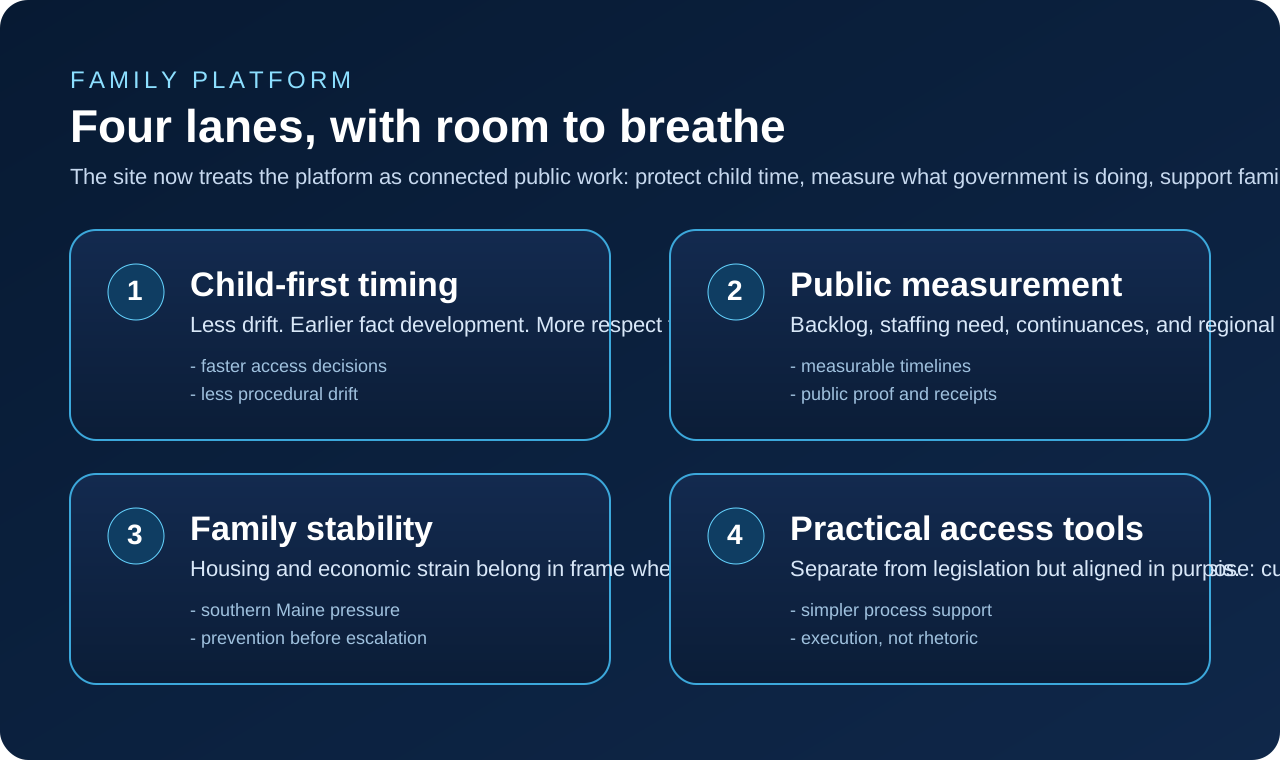
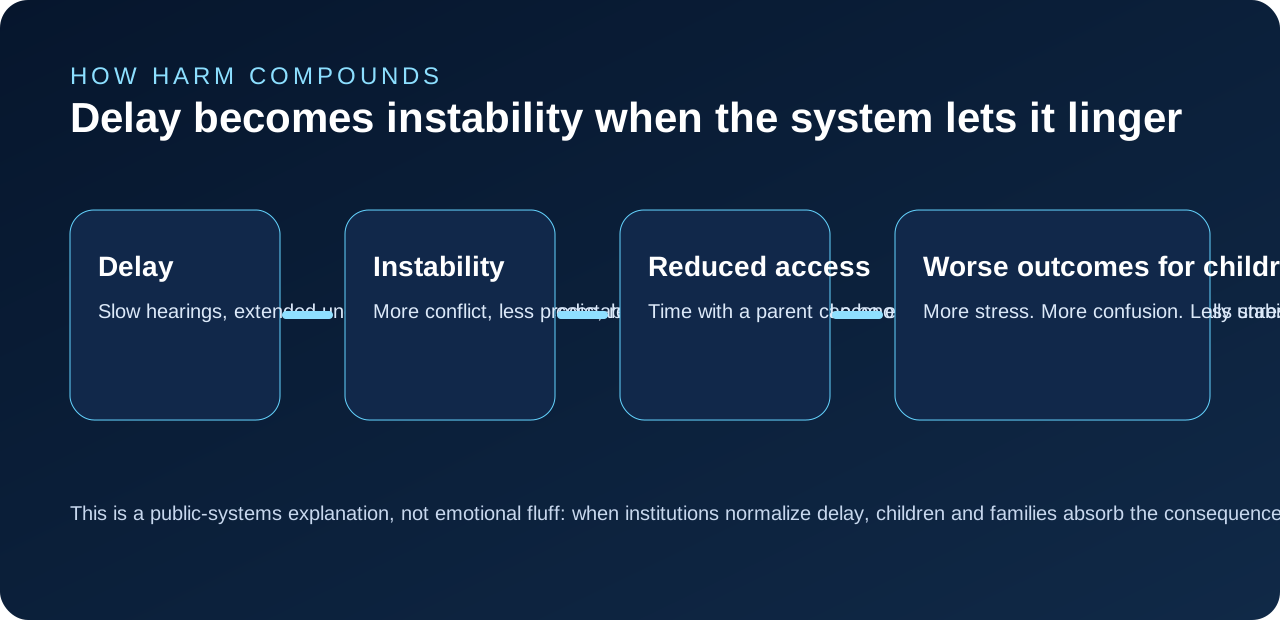
The research cited on the site maps cleanly onto the public-record argument already in the campaign: delay amplifies conflict, uncertainty, economic strain, attachment disruption, and developmental harm. That is why this platform refuses to treat timing as an administrative footnote.
A mature platform should tell people what it would watch, what movement would count as improvement, and where the public record would still need to get better.
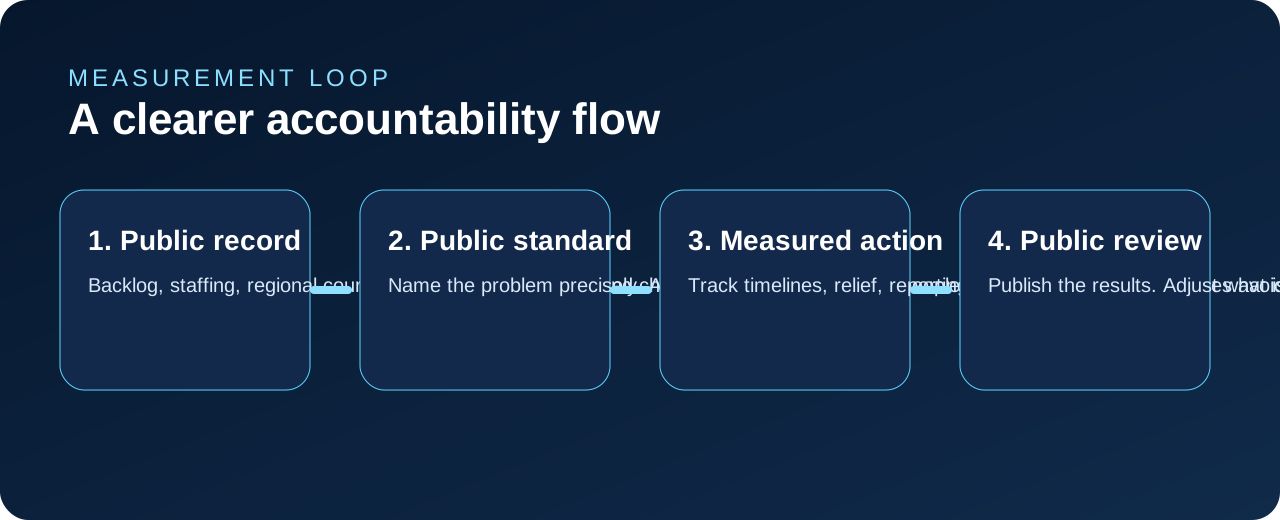
| Measure | Why it matters | Where this site points people |
|---|---|---|
| Pending family matters | Backlog is one of the clearest public signs that child time is being consumed by drift. | Family backlog chart |
| Staffing need vs. current capacity | Performance claims are not credible without acknowledging resource constraints. | Capacity chart |
| Regional family + eviction pressure | Southern Maine families are carrying family-court and housing pressure at once. | Regional pressure section |
| Housing instability affecting children | Housing belongs in frame only where it clearly helps explain family instability and child stress. | Housing + family stability |
| Child-impact research | The platform needs more than emotion; it needs a reasoned account of why timing and instability matter. | Child-impact research |
I deliberately avoid simplistic causation claims on this site. It uses housing and public-health data only where they help explain the real-world pressures families are carrying.
Every major argument on this site is meant to point to a public record, a source library section, a chart, or a named study.
ProSe is a separate execution lane. It is featured here because reducing delay and rework is part of the same public-interest standard, not because technology replaces policy reform.
I am not seeking authority over others for its own sake, not running for salary, and not interested in bureaucratic prestige. I am trying to be useful where the system has too often been evasive, slow, or indifferent.
The bill-form centerpiece, plus the measurable context that explains why it exists.
The official reports, charts, research summaries, and public-record anchors behind the campaign.
Officials, builders, skeptical readers, and serious supporters often need the shortest possible explanation of how the lanes fit together. Keep that packaging attached to this page so the architecture is easier to review, compare, and carry forward.
Use this when someone needs the four lanes, the scorecard, and the guardrails in the shortest disciplined order.
The standards page is the cleaner companion when someone wants the public rules this platform is trying to hold itself to.
Even when someone is reviewing the architecture, the Family Hub should stay one click away so the site does not become theory first.
The platform reads best when it stays paired with the dashboard and the evidence center instead of floating on branding alone.
That is why this page now carries a shorter guide, but still keeps the flagship page, the standards, and the family-help lane attached right beside it.
Practical links for court process, legal aid, housing, safety, and family supports.
See what is being proposed, what problem it is supposed to solve, and what remains unfinished.
When a custody or parental-rights dispute turns on the child's best interest, families should be able to see the actual Maine factors, understand what each one points toward, and organize their file without guessing what the court language means.
Different people need different first clicks: a calm start page, a search page, or an audience-specific reading order.
The packet shelf should hold the printable materials without forcing anyone back through every long page.
Routing pages should never dead-end; they should move people cleanly into proof, help, or both.
Claim matrix, source ladder, and safe public wording for proof-heavy materials.
Open standardsMetric freshness, source limits, success measures, and data gaps.
Open dashboard methodPublic issue register before the next initiative revision.
Open reviewUse rev08a for the next safer, harder-to-attack framework; use the public review center for side-by-side explanation, risk notes, source discipline, and safe comment boundaries.
Public boundary: JTforME separates public records, official data, party positions, public-policy argument, allegations, inferences, corrections, and adverse material by type. A complaint, referral, review, or public statement is not an adjudicated finding. Do not send child names, sealed records, medical details, private allegations, or confidential files through public campaign links. Do not contact, threaten, shame, surveil, pressure, or review-bomb a private person.
Not every family week needs a bigger packet. When the pressure is ordinary but real, use one planning sheet first, then open the smaller support pages only where the week is actually slipping.
Use one place for school, appointments, transitions, supplies, support contacts, and the next message that has to go out.
If this week touches school, providers, transitions, appointments, and support people all at once, start with a child-needs snapshot before opening the larger family-help set.
When the week is crowded but not yet broken, start with a week priorities card before opening the larger family-help set.
The current mobile template pack gives families quick Apple Notes, Google Keep, and Google Docs versions for routine planning, handoffs, questions, court-week checklists, and other short practical uses, with room for more mobile-ready formats as the lane grows.
The family-help lane is now big enough that one center page makes the tool choice cleaner. Use it when the real job is deciding what to open first, not hunting across several sections.
Choose by the kind of week, the next conversation, the current family PDF lane, the one-page quick picks, or the phone-first template lane.
The center page is there to reduce overload, not replace the Family Hub or the fuller best-interest guide.
This lane is about reducing loyalty pressure, messenger roles, denigration, and adult-driven distance from safe relationships. It stays on the child-well-being side, not the litigation side.
Use the fuller guide when conflict is spreading into handoffs, school, providers, or ordinary contact with safe adults around the child, especially if the child is feeling caught in the middle.
The fastest de-escalation often comes from shorter child-centered messages, steadier exchange notes, one cleaner communication lane, a visible support circle, and quick repair after rough handoffs or school/provider confusion.
This part of the platform is for lowering messenger roles, loyalty pressure, rough exchange harm, and school/provider spillover in a child-centered way.
Families often live in the middle lane: teachers, counselors, nurses, pediatricians, therapists, childcare staff, and appointment follow-up. When conflict spills into those systems, the site needs a cleaner care-coordination door.
This page now sits between the broader family-tools center and the relationship-protection lane so users can stabilize school, childcare, and care routines without over-reading the rest of the site.
School connectedness, pediatric follow-up, counseling continuity, pickup clarity, and medication continuity are not side issues. They are part of the child's ordinary stability and should have a clearer lane in the platform.