Flagship dashboard
This page carries the clearest one-link version of the public record: backlog, capacity, regional pressure, stability pressure, and the response standard.
No private case intake: do not send child names, sealed records, private allegations, or confidential files through public campaign links. Privacy boundarySafety first
Site boundary: JTforME is the campaign, public-record, citizen-initiative, and Maine family-help routing hub. For volunteer-only public education, printable tools, and research/source materials, use FOCaF.
One page to understand the platform, the public record behind it, and why this site is trying to become a serious statewide family-matters hub.
I want this page to do what too many campaign sites never do: show people the problem record clearly, show them the receipts, and tell them what counts as real improvement.
Use it when the job is showing the statewide pattern, the measurable pressure, and the response standard in one disciplined link.
This page carries the clearest one-link version of the public record: backlog, capacity, regional pressure, stability pressure, and the response standard.
Use it when a reporter, official, skeptic, or supporter needs the strongest single public-facing explanation before going deeper.
If a person needs safety, court prep, housing help, or a real official door now, the practical pages should still come first.
This page should hand readers into sources, briefs, or packet guides once they want proof detail or portable materials.
Use the flagship page in a clear sequence: orient the reader, scan the visuals, move into the tighter brief, prove the claim in sources, then carry the right artifact forward.
Give the reader the big picture before asking them to read charts or argue details.
Let the map and figures show the pressure, but keep their limits visible.
When something needs to travel, the brief often does the job better than the full flagship page.
When questions sharpen, use the evidence labels, methods, and source cards—not just the top-level visuals.
Use the packet shelf when the page itself is too large to send or save cleanly.
These nearby pages keep the public record, source trail, and measurement layer close together.
Open the evidence center when you want to inspect the receipts directly.
Open Sources + proofUse the chart packets, CSVs, and concise issue framing.
Open Briefs + dataFollow what is proposed, what is measured, and what still needs to move.
Open Reform TrackerUse the standard-setting page when the question is what a fix should be judged against.
Open StandardsIf child-access pressure, family-court pressure, or fear for safety is making today feel dangerous or unbearable, start with crisis support, counseling, and the cleanest Maine justice doors first.
This page is meant to be the most shareable explanation of what I am trying to do for children and families in Maine, and the flagship public read inside a larger family-matters hub.
I want Maine to stop treating family delay as normal. The public record already shows backlog, staffing need, regional pressure, and housing instability. My platform keeps family matters first, uses housing only where it clearly explains instability, and measures whether reform actually reduces preventable harm.
The case for reform gets stronger when people can see the problem record quickly. This dashboard combines family-case backlog, southern Maine court pressure, housing strain, and child-impact research in one place. The purpose is not to exaggerate. The purpose is to make the system legible enough to improve.
This page ties together the same proof layers used across the site: the Maine Judicial Branch annual report, the 2023 workload study, Region 1 and Region 2 caseload data, MaineHousing research, federal vacancy data, and child-impact research. I am asking people in Maine to judge the platform by whether it tells the truth, cites the record, and stays measurable.
If this is your first visit, use the top-line numbers first, then the visuals, then the response and scorecard.
It is built to carry the public record, the plain-language frame, and the measurable standard in one link.
Charts should route to the evidence center so people can inspect the source trail without hunting for it.
The right question is not whether the language sounds strong. It is whether the page makes improvement legible.
This page works best when it behaves like a public brief with a readable sequence, not a pile of charts. The job is to help someone understand the public case quickly and then choose whether to verify it or carry it.
That is where the public case becomes legible fastest: backlog, capacity, housing pressure, and child-impact context in plain order.
The figures should narrow the question and support the argument already stated in words.
The dashboard should keep explaining what improvement would look like instead of stopping at diagnosis.
After the flagship page, the next step should be sources, a brief, or a packet - not more wandering.
The dashboard should work for families, helpers, officials, reporters, skeptics, and supporters. The question is not whether everyone reads it the same way. The question is whether each reader can move cleanly to the next useful document.
That means the fastest route stays visible, the proof stays close to each claim, and the next useful document is always one click away.
This flagship page is strongest when it keeps a disciplined split between what the visuals show clearly, what still needs the source layer, and what belongs in the response standard rather than the chart itself.
The summary strip, map, and pressure charts should help a new reader see that this is a public record problem, not a private anecdote.
The figures show pressure, backlog, staffing need, and instability signals. They do not replace the fuller receipt trail or the individual realities families live through.
The fair test is claim, chart, source card, and official record - not arguing with a screenshot or a clipped number alone.
The right portable item comes after the scan order is clear: first understand the page, then carry the shorter brief or record pack.
This page is meant to work on the first click for a new visitor: start with the baseline numbers, move to the visuals, then move to the evidence center and the proposed response.
The 2025 annual report says family matters improved, but statewide family backlog still sat above the 2019 average.
The workload study is part of the story. A serious reform argument has to acknowledge capacity pressure instead of pretending delay comes from nowhere.
Housing appears here only where it helps explain the instability families are already carrying while cases drag on.
Even a limited single-night homelessness snapshot still showed children inside the instability picture.
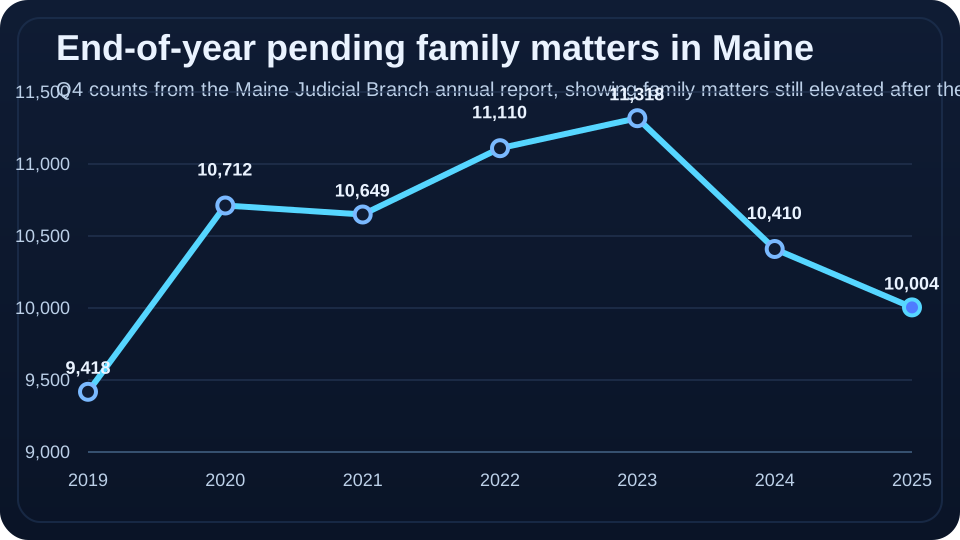
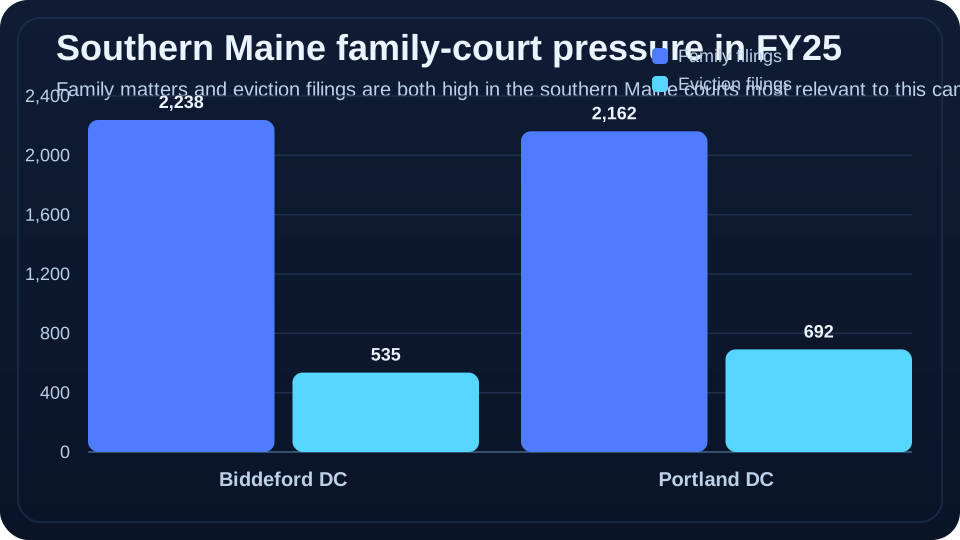
This page is not just there to impress people on first click. It should orient new readers, give skeptics a short path back to receipts, and give supporters or reporters something sturdy enough to share without overclaiming.
The graphic stays compact on purpose. The interpretation, priority order, and source trail now live in a readable flyout so the visual does not turn into tiny-text clutter.
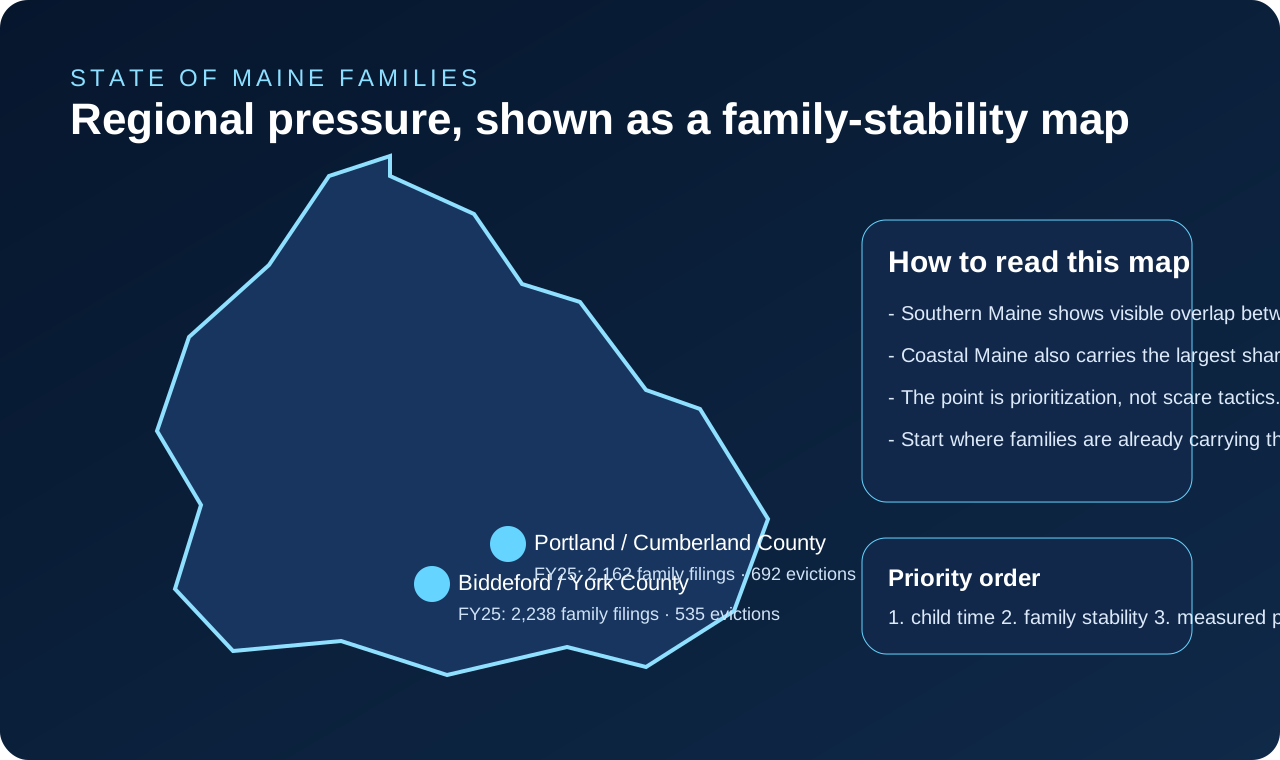
The map is now a cleaner visual-only anchor. Use the flyout for the interpretive notes, the priority order, and the source trail behind the graphic.
I want this campaign to say the obvious plainly: when institutions normalize drift, children and parents absorb the consequences in real time.
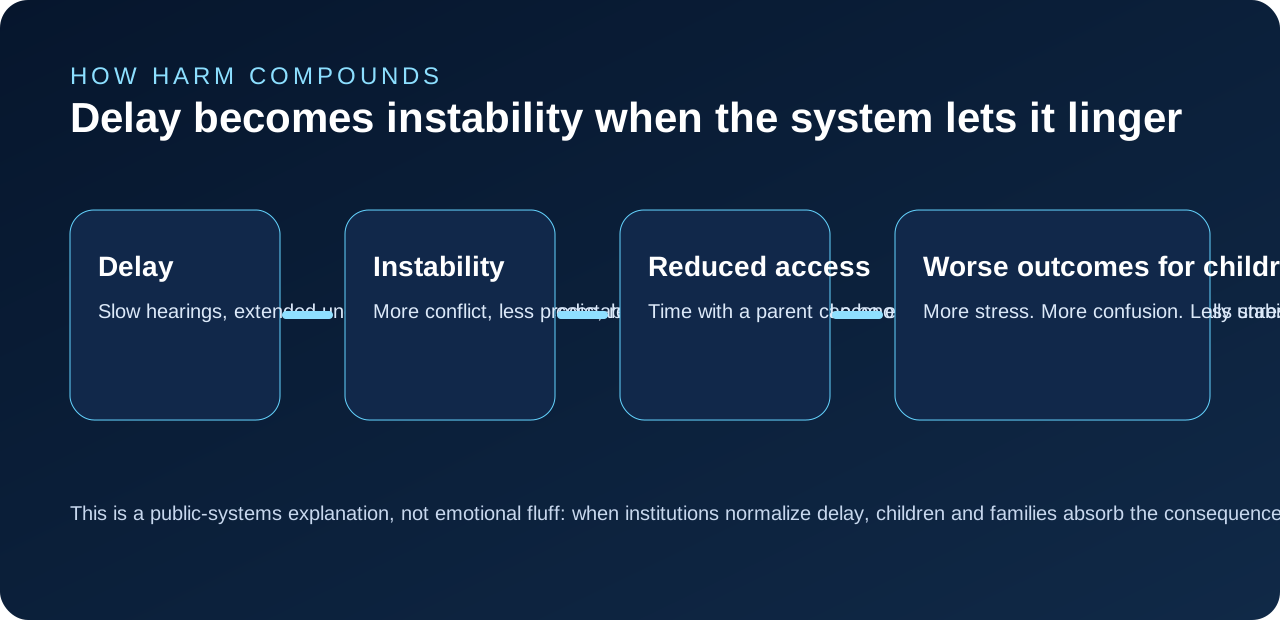
This is the discipline I want across the site: a claim people can inspect, a visual that helps them understand it faster, a named source behind that visual, and a response that can be judged later.
The dashboard summary and backlog chart should make it clear that delay is not a private complaint. It is a measurable public problem.
The page should acknowledge capacity constraints directly so the reform case stays serious instead of pretending the system pressure is imaginary.
The regional map matters because court strain, housing instability, and family stress do not arrive neatly separated in real life.
The child-impact layer is here so the page does not slip into talking about calendars as if that were the whole harm.
The page should not stop at diagnosis. It should tell people in Maine what I would try to move first and what standard I would use to judge whether it is working.
Fewer pending family matters and fewer repeat motions driven by unresolved drift.
More timely access decisions, earlier fact development, and less avoidable delay.
Fewer families pushed from legal strain into housing strain or deeper instability.
Better public reporting, cleaner receipts, and fewer excuses for why people cannot see what is happening.
If someone only has one click to give this campaign, this should be the click.
The next step should always be the evidence center, not blind trust.
I want people to evaluate this platform by whether it makes public systems more legible and more answerable.
Use the dashboard, the briefs, and the story-intake page to keep the platform grounded in reality.
This page is the best first send for the public record. It is not the best first send for a person in crisis, a person trying to decode paperwork, or a person who still needs the right official or practical page first.
Safety, counseling, and suicide-prevention routes should stay ahead of every public-record page when the pressure is live.
That is usually a Terms + Basics, Prepare + Organize, or Forms + Filing question, not a dashboard question.
The verified-door page is the cleaner first send when somebody needs Maine courts, DHHS, 211, housing, or legal-help doors.
Start Here, Find Help Fast, and the Family Hub are still the better first send when the question is what to do next under pressure.
Some readers need the short architecture, some need the record pack, and some just need the cleanest public entry point. Keep the strongest materials attached to this page so it remains a real front door, not a dead end.
Use this when someone needs the cleanest route through the flagship page in a few minutes, with the reading order already set.
Use the one-page brief when someone wants the short public case without opening every chart module one by one.
Use this when the reader needs a review path that stays disciplined: flagship page, evidence center, bill text, findings, and changelog.
Use this when someone wants the shortest route from claim to chart to source without carrying the whole site in their head.
This packet layer is for carrying the public record cleanly. It is not a replacement for the practical help doors on the family-help side of the site.
The dashboard remains the fastest way to hand someone the whole public case without sending them through every page.
This is where claims should become source trails, chart data, and packets that skeptical readers can inspect directly.
After the public record comes the practical lane: routing, official doors, and family-help tools under stress.
The new method page defines metrics, source freshness, limits, data gaps, and future success measures for a stronger State of Maine Families dashboard.
The accountability page now frames administrative drift and institutional delay as measurable public failures without profanity, personal attacks, or unsupported motive claims.
Public boundary: JTforME separates public records, official data, party positions, public-policy argument, allegations, inferences, corrections, and adverse material by type. A complaint, referral, review, or public statement is not an adjudicated finding. Do not send child names, sealed records, medical details, private allegations, or confidential files through public campaign links. Do not contact, threaten, shame, surveil, pressure, or review-bomb a private person.
The Patrick S. Bedard family-law record page examines prolonged family litigation, attorney incentives, and the generational harms children experience when conflict becomes a business model.
Open the named Amanda Morse order-implementation page for the complete interactive chronology, 108,000-pages visualization, evidentiary boundaries, and correction path.