The charge
Delay, gatekeeping, and unreviewed adult narratives become foreseeable harm when public systems do not promptly test the facts.
The trilogy is live
Carpooling to Hell — the record. IN RE: The Tyranny of Family Law — the indictment. Trial by Fire — the adversarial test.
The indictment · Book II
Read the indictment.
Formal. Research-grounded. Constitutional. Policy-driven.This is why the machine produces foreseeable harm — and what the law should require instead. The argument moves from personal record to constitutional duty, operational failure, neutral investigation, child time, and enforceable remedies.
Amazon: Book II is live. This button opens the exact-title Amazon search for the listing.

Book II companion arcade · The Indictment
Build sourced chains from Fact → Source → Standard → Harm → Remedy. Unsupported leaps strengthen the Presumption Engine. Accuracy breaks it.
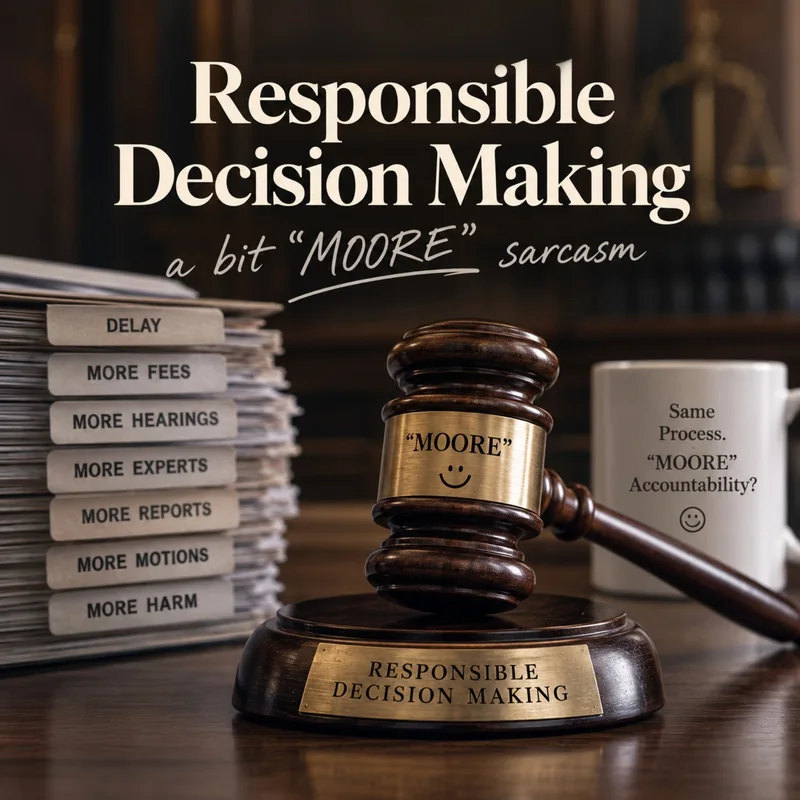
A bit more responsibility
Book II is the formal version of the argument: public power must test facts promptly, protect child time, and stop mistaking additional process for justice. The satire is loud; the legal point is simple.
What this book does
Delay, gatekeeping, and unreviewed adult narratives become foreseeable harm when public systems do not promptly test the facts.
The book rests on source navigation, court-process records, research, timelines, and operational analysis rather than outrage alone.
No neutral review, no substantive order. Immediate investigation, findings, enforceable child-centered orders, and accountability for delay.
The spine
Personal. Angry. Profane at times. Darkly funny. Immediate. This is what it felt like inside the machine.
Book IIFormal. Research-grounded. Constitutional. Policy-driven. This is why the machine produces foreseeable harm.
Book IIICold. Adversarial. Precise. Theatrical because the record itself is theatrical.
And beneath all three:
I just wanted to be a father.“…PROMPTLY AND WITHOUT DELAY.”